Brake Safety Week is Aug. 22-28

CVSA has set August 22-28, 2021 as Brake Safety Week. The week-long inspection period will focus on brake systems and components. As always, proactively check and service your vehicle to ensure you are mechanically fit, compliant, and SAFE! During Brake Safety Week, commercial motor vehicle … Read More

Hurricane Sally: Hours Regs Suspended, I-10 Closure

The FMCSA has suspended hours regs for relief haulers along the Gulf Coast, and a portion of Interstate 10 at the Alabama/Florida line is closed since Hurricane Sally made landfall and wreaked havoc. The Federal Motor Carrier Safety Administration issued a regional emergency declaration for Alabama, Florida, … Read More

Roadcheck Rescheduled for Sept. 9 -11

The Commercial Vehicle Safety Alliance’s (CVSA) Roadcheck, the year’s largest inspection blitz, has been rescheduled for Sept. 9 – 11. Owner-operators and carriers have a month to prepare for the 72-hour enforcement period which has a special emphasis on the driver requirements component of inspections. … Read More

2020 Brake Safety Week Set for Aug. 23-29

The Commercial Vehicle Safety Alliance’s (CVSA) Brake Safety Week will proceed as scheduled Aug. 23-29. Enforcement officials will inspect commercial motor vehicles throughout the week for critical brake violations. Any brake-related or other critical out-of-service inspection item violations will restrict those vehicles from traveling until … Read More

Face Coverings Required at Love’s Starting July 29

Starting July 29, Love’s is requiring customers to wear face coverings or masks while inside all Love’s Travel Stops.  The Oklahoma City-based Love’s Travel Stops & Country Stores announced today that all of its stores will require a mask or face covering July 29 at … Read More

Driver and Cargo Security During COVID-19

It is very important during this unprecedented time we are experiencing to realize how important security methods are to our drivers. We would like to think that during this emergency crisis that no one would use this opportunity to harm a driver, steal cargo, or … Read More

Oversize Permit Issuance During COVID-19

Updated 4/7/20, 2:00 p.m. Government agencies, including US state and Canadian province permit offices, have some changes to their day-to-day operations and permit issuance plans during the COVID-19 outbreak. Agencies are staying in direct contact with transportation companies, permit agencies and organizations such as the … Read More

Michigan Spring Weight Restrictions Update

Effective 6 a.m. Monday, Feb. 24, weight restrictions will be imposed and enforced on all state truck line highways within an area of Michigan described as follows. Highways north of a line on M-43 in the City of South Haven east to US-131 in Kalamazoo … Read More

Indiana Delays on Oversize/Overweight Permits

The Indiana Department of Revenue (DOR) is advising all to expect delays on oversize/overweight permits. They stated that although most OS/OW permits are issued in three business days, permits with more complex routes that require INDOT district approval will take additional time to process. They … Read More

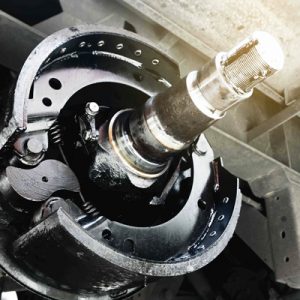
Truck drivers, have you asked yourself lately if your brakes are ready for the day? Some may answer no and there may be some uncertainty with that question, especially with some recent data released by the CVSA about the number of vehicles removed from the road for brake-related violations. But don't worry, with some specific brake tips and an inspection checklist, you'll be ready to hit the road. Tools You Need to Inspect Your Brakes: Blocks/chocks to place behind tires Chalk to mark push-rods Small ruler to measure push-rod travel and brake linings Brake application device (to apply brakes) or a “second” person to assist Before You Inspect: Park on a level road surface Block/chock the tractor wheel(s) and trailer wheel(s), if hooked Confirm air pressure at 90-100 psi Shut off engine – Remove keys from ignition Release spring (parking) brakes Check each brake to confirm normal released position Listen for air leaks Inspect for: Chaffing/rubbing air hoses against other hoses and/or other components Hoses that are worn to second color or nylon braids are visible Damaged, broken, or missing components; i.e. broken brake chamber bracket, missing clevis pin, hanging slack adjuster Brake pads/linings; Air Drum brake pad, measured at the center, must be above ¼ inch. Air Disk brake, must be above 1/8 inch. Cracked pads/linings or rust-jacked lining from shoe (upper & lower) Excessive up/down & sideways movement on the camshaft (worn bushings) Rusted drum due to inoperative brake External cracks on the brake drum Rusted (holes) brake chamber Measure the Push-Rod Travel Stroke by: Check air pressure gauges are holding 90-100 psi Make certain spring (parking) brakes are fully released Confirm you’ve made a chalk mark on each push-rod at the rear of the brake chamber Via the brake pedal apply full (service) brake application (approx. 80 psi) Measure distance from the chalk mark to rear of brake chamber Confirm travel is within DOT Standards via brake chamber size & if short or long stroke: May's Brake Safety Inspection Data In May, the Commercial Vehicle Safety Alliance’s (CVSA) law enforcement members conducted 10,358 commercial motor vehicle inspections focused on identifying brake system violations. Of those inspections, 16.1% of vehicles had brake-related critical vehicle inspection items. Those 1,667 vehicles were placed out of service until the violations could be corrected. According to the U.S. Department of Transportation’s Federal Motor Carrier Safety Administration (FMCSA), over half a million commercial motor vehicle violations in 2017 were related to brakes. CVSA aims to call attention to this serious issue through its targeted brake safety enforcement and awareness campaigns, such as the May 15 unannounced inspection blitz. This enforcement initiative highlights the work that's done by inspectors every day to keep roadways safe. Checking brake systems and their components is always part of roadside vehicle inspections. Inspectors also paid close attention to violations involving brake hoses/tubing, including the following from May's unannounced blitz: 996 units with chafed rubber hose violations. 185 units had chafed thermoplastic hose violations. 1,125 violations of 49 Code of Federal Regulations § 393.45 and Canadian equivalent violations that included chafed rubber hoses. 124 violations of 49 Code of Federal Regulations § 393.45 and Canadian equivalent violations that included kinked thermoplastic hoses.  

Truck drivers, have you asked yourself lately if your brakes are ready for the day? Some may answer no and there may be some uncertainty with that question, especially with some recent data released by the CVSA about the number of vehicles removed from the … Read More